

What Is Reward-Based Learning? A Simple Guide for Students and Parents
Reward-based learning explained simply: psychology, research, examples, and how platforms like Earnexam use points and challenges to build study habits.
What Is Reward-Based Learning? A Simple Guide for Students and Parents
Let us be honest. Many students do not study every day with full discipline. They study seriously only when the exam is close, the syllabus suddenly looks huge, and parents start asking, “Beta, revision ho gaya?”
This is very common. Most students are not lazy. Many of them simply struggle to start, continue and feel progress. Studying has long-term benefits, but the effort is daily and sometimes boring. A chapter completed today may show results after weeks or months. That gap between effort and result is where motivation often drops.
This is where reward-based learning can help, if it is designed carefully. It does not mean bribing students to study. It does not mean promising marks or making education a game of shortcuts. At its best, reward-based learning gives students small signs of progress, recognition for effort, and a reason to come back tomorrow.
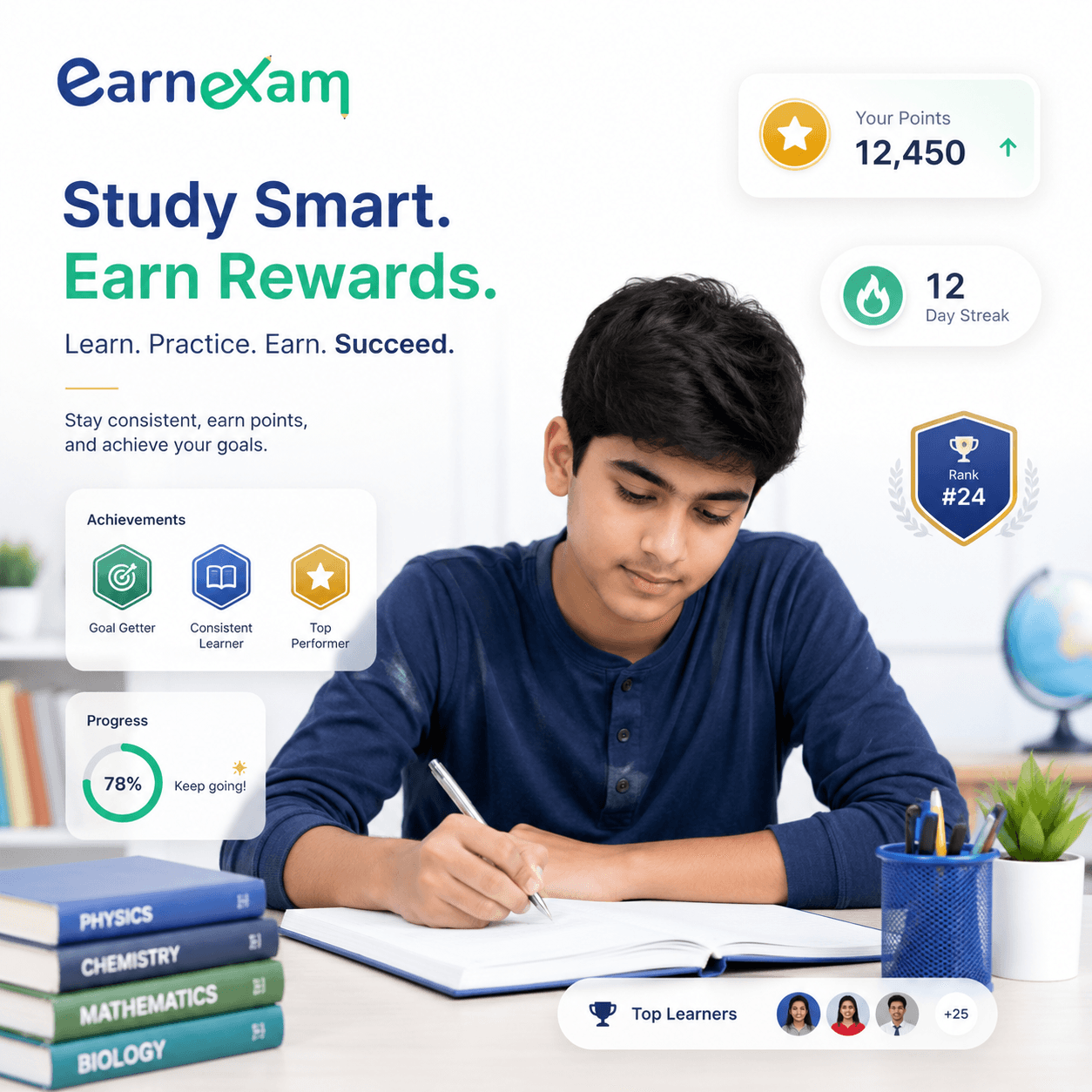
In simple words, reward-based learning means using points, badges, streaks, ranks, challenges or other visible rewards to encourage useful study behaviour. For example, a student may earn points for completing a quiz, unlock a badge for consistent practice, maintain a streak for daily learning, or join a merit challenge where performance is measured by clear rules.
Why Motivation Fades for Students
Students usually start with good intentions. On Monday, they decide, “From today I will study properly.” But by Thursday, tuition homework, school pressure, mobile distractions and tiredness take over. This does not happen because the student does not care. It happens because motivation is not a fixed thing.
Motivation rises when students feel three things:
- They know what to do next.
- They feel their effort is being noticed.
- They can see some progress, even if the final exam is far away.
Traditional studying often misses the third point. A student may solve 30 questions, but unless someone checks, appreciates or tracks it, the effort feels invisible. Reward-based learning tries to make effort visible.
What Reward-Based Learning Looks Like
Reward-based learning can be very simple. It may be as small as a teacher giving stars for homework, a parent marking a calendar for daily revision, or an app showing points after a quiz. The idea is not new. Good teachers and parents have always used encouragement. Digital platforms now make this more structured and trackable.

Here are some common examples:
- Points: Students earn points when they complete learning actions like quizzes, revision tasks or practice sessions.
- Badges: Students receive badges for milestones such as consistency, subject improvement or challenge participation.
- Streaks: Students maintain a streak when they study for multiple days without a break.
- Merit challenges: Students participate in rule-based academic challenges where results depend on performance, accuracy and participation rules.
- Progress levels: Students move through levels as they complete topics or improve their learning habits.
These tools work best when they reward real learning behaviour, not random clicking. A good reward system should push students towards revision, accuracy, consistency and honest effort.
Reward Types Compared
| Reward Type | What It Encourages | Best Use | What Parents Should Check |
|---|---|---|---|
| Points | Completion and participation | Daily quizzes, practice and revision | Points should be linked to learning actions, not meaningless activity |
| Badges | Recognition and milestones | Consistency, subject progress and achievements | Badges should be earned through clear criteria |
| Streaks | Daily habit-building | Short daily study sessions | Streaks should motivate, not create stress |
| Merit Challenges | Focused performance | Quiz contests, topic tests and revision challenges | Rules, scoring and rewards should be transparent |
Extrinsic vs Intrinsic Motivation
Whenever rewards are discussed in education, one important question comes up: Will students study only for rewards?
This is a fair concern. In psychology, there are two broad types of motivation. Extrinsic motivation means doing something for an outside reward, such as points, praise, badges or prizes. Intrinsic motivation means doing something because you find it meaningful, interesting or personally valuable.
For example, a student may first take a science quiz because there are points. That is extrinsic motivation. But after solving a few questions, the student may realise, “I actually understand this topic better now.” Slowly, confidence grows. The subject becomes less scary. That is where intrinsic motivation can begin.
The mistake is to treat rewards as the final goal. Rewards should be a starting push, not the whole journey. A healthy learning platform should use rewards to help students build habits, confidence and curiosity. It should not make students feel that learning has no value unless something is given every time.
Think of rewards like training wheels on a cycle. They help in the beginning. But the real aim is balance, confidence and independent movement.
How Points, Badges and Streaks Help Study Habits
Small rewards can help students because they reduce the friction of starting. Many students do not need a lecture. They need a small reason to open the app, attempt a quiz, and complete one task. Once they start, learning becomes easier.
Points give quick feedback. When a student completes a quiz and earns points, the brain receives a small signal: “I did something.” This can make the next session easier to begin.
Badges create identity. A badge like “Consistent Learner” or “Math Practice Starter” can make a student feel seen. This matters, especially for students who are not always toppers but are trying to improve.
Streaks support routine. A 5-day or 10-day streak can remind students that study is not only an exam-week activity. Even 15-20 minutes daily can build momentum.
Merit challenges add focus. When a challenge is based on a topic, time window and transparent scoring, students get a clear target. It can make revision more active than simply reading notes again and again.
What Reward-Based Learning Should Not Do
Reward-based learning should never create false promises. No app, teacher or system should say that rewards will guarantee marks. Marks depend on many things: school teaching, practice, understanding, exam pattern, revision, health and consistency.
It should also not create unhealthy pressure. If rewards become too aggressive, students may start chasing points instead of understanding. That is not good learning.
A responsible platform should avoid:
- Guaranteed marks claims
- Guaranteed earning claims
- Fear-based selling like “Use this or you will fail”
- Confusing reward rules
- Random prizes not connected to learning merit
- Pressure that makes students anxious
Students deserve motivation, but they also deserve honesty.
A Parent-Trust View: Are Rewards Safe?
Parents are right to ask questions before allowing any learning app. A child’s time, attention and emotional health are important. Rewards should not become a distraction from study. They should support study.
A safe reward-based learning system should be transparent and rule-based. Parents should be able to understand how points are earned, how badges are given, how challenges are scored, and what the limits are.
For example, if a student earns XamCoins or similar platform points, the rules should be clear. What action gives points? Is it linked to learning? Are there limits? Are rewards based on merit, participation or consistency? Is there any misleading promise? These questions matter.
Good reward systems are not about making children run behind rewards. They are about making study effort visible and structured.
Checklist: How to Choose a Safe Learning App
Before choosing a reward-based or gamified learning app, parents and teachers can use this simple checklist:
- Does the app clearly explain how points, badges or rewards work?
- Are rewards connected to learning actions like quizzes, practice or revision?
- Does the app avoid guaranteed marks or guaranteed earnings claims?
- Are challenge rules, scoring and eligibility clearly written?
- Can students learn without feeling forced or scared?
- Does the app encourage consistency, not only competition?
- Is the language age-appropriate and respectful?
- Can parents understand what their child is doing on the platform?
- Does the platform protect student data and account safety?
- Does it balance rewards with real learning content?
If most answers are yes, the app is moving in the right direction.
Where Earnexam Fits In
Earnexam is built around a simple idea: students should feel motivated to practise, revise and improve through structured learning actions. On Earnexam, rewards are not presented as magic. They are used as encouragement for participation, consistency and merit-based learning activity.
Features like points, XamCoins, badges, streaks and merit challenges can help students see their study journey more clearly. A student who usually studies only before exams can start with small actions: attempt one quiz, revise one topic, join one challenge, or maintain a short streak.
For parents and teachers, the important part is that rewards should remain transparent and rule-based. Earnexam’s goal is to make learning more engaging while keeping the focus on study habits, practice and academic effort.
It is not about saying every student will get the same result. It is about giving every student a better reason to begin and continue.
Common Myths About Reward-Based Learning
Myth 1: Rewards make students lazy.
Not always. Poorly designed rewards can distract students. But well-designed rewards can support discipline and consistency.
Myth 2: Only weak students need motivation.
Every student needs motivation. Even high-performing students use goals, milestones and recognition to stay consistent.
Myth 3: Gamified learning means less serious learning.
Gamification is only a method. If the questions, rules and tracking are serious, the learning can also be serious.
Myth 4: Rewards replace teachers and parents.
No. Rewards can support learning, but teachers and parents still play a very important role in guidance, values and emotional support.
Final Thought
Students do not always need big speeches. Sometimes they need a small push, a visible milestone and a fair system that recognises effort. Reward-based learning can provide that push when it is honest, balanced and connected to real study behaviour.
For students, it can make daily practice feel less heavy. For parents, it can make progress easier to understand. For teachers, it can support participation and revision.
The best reward is still confidence: the feeling that “I studied today, I improved a little, and I can continue tomorrow.” Points, badges and challenges are useful only when they help students reach that feeling.
If you want to see how reward-based learning can work in a practical, student-friendly way, you can explore Earnexam and try your first learning challenge.
FAQ
What is reward-based learning?
Reward-based learning is a method where students receive points, badges, streaks or other recognition for useful learning actions like quizzes, practice and revision. The aim is to support motivation and consistency.
Is reward-based learning good for students?
It can be helpful when rewards are transparent, rule-based and connected to real learning. Rewards should encourage study habits, not distract students from understanding.
Will rewards guarantee better marks?
No. Rewards cannot guarantee marks. They can support practice, revision and consistency, but exam results depend on many factors including understanding, preparation, health and exam conditions.
How does Earnexam use reward-based learning?
Earnexam uses learning-linked features like points, XamCoins, badges, streaks and merit challenges to encourage students to practise, revise and participate through clear rules.
See reward-based learning in action - play your first Earnexam challenge free.
Open Earnexam